
The Water Source
Water may enter through a wall crack, a pipe penetration, the wall-floor joint, an open crawl space, or surface drainage directed toward the foundation. The repair should match the source.
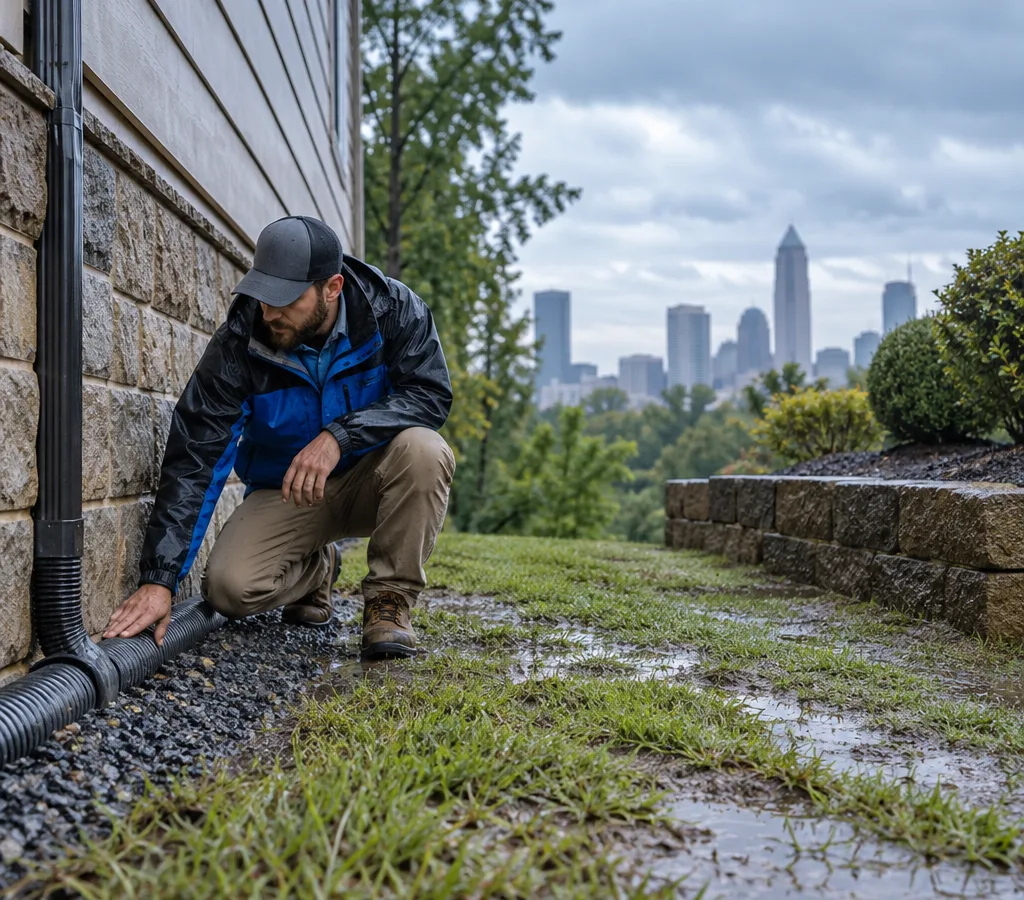
Get a moisture-control plan based on the source of the water, the condition of your foundation, and the drainage around your home.
Atlanta waterproofing companies should do more than recommend a product after a quick look at a damp wall. A useful inspection traces how water reaches the structure. That means checking grading, gutters and downspout discharge, foundation penetrations, wall cracks, crawl-space conditions, and signs of hydrostatic pressure.
Foundation Repair Atlanta Georgia approaches the work as a professional foundation company in Atlanta, with attention to both water entry and the conditions that allow it. The proposed scope should identify the observed problem, explain why each measure is recommended, and separate necessary work from optional improvements.
Atlanta's humid climate and frequent heavy rain make exterior water management especially relevant. Properties on sloped lots may receive runoff from uphill areas, while dense intown development can leave limited room for excavation or discharge routing. A contractor should account for the house, lot, access, and safe discharge point rather than applying the same system to every property.
Water may enter through a wall crack, a pipe penetration, the wall-floor joint, an open crawl space, or surface drainage directed toward the foundation. The repair should match the source.
The inspection should cover soil grading, gutter overflow, downspout termination, low areas beside the house, and hard surfaces that send runoff toward the structure.
Stair-step masonry cracks, wall movement, settlement signs, and deteriorated mortar can point to structural concerns that a waterproof coating alone will not correct.
Efflorescence, staining, musty odors, condensation, wood decay, and elevated humidity help show where moisture is present, but the visible spot may not be its entry point.
Sump pumps and drainage systems need a practical discharge route that moves collected water away without directing it toward a neighboring property or back against the foundation.
Finished walls, porches, decks, landscaping, narrow side yards, and buried utilities can affect the method, labor, and restoration included in a written estimate.
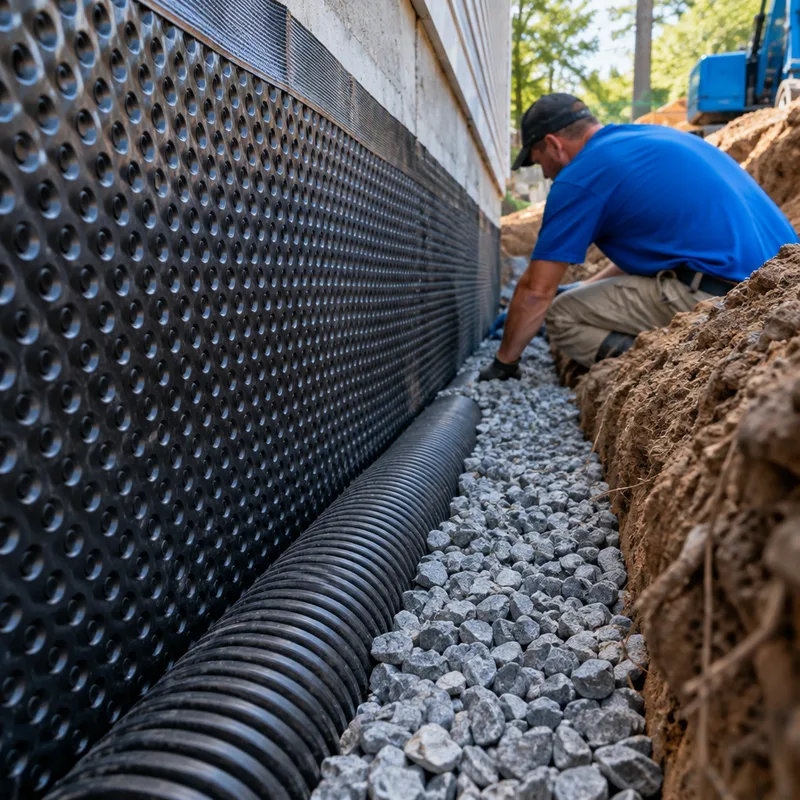
Exterior waterproofing usually involves exposing the foundation wall, repairing defects, applying a waterproof membrane, adding a drainage mat when appropriate, and placing a footing drain in washed stone. This method addresses water before it crosses the wall, but excavation access and restoration can make it more involved.
Interior perimeter drains collect water at the wall-floor joint and direct it to a sump basin. A sump pump then sends the water to an approved discharge point. Battery backup options may be worth discussing when a property depends on pumping during severe weather or a power interruption.
Crack injection can be suitable for certain nonmoving poured-concrete cracks. Crawl-space work may include ground vapor barriers, sealed vents, drainage, sump equipment, or encapsulation. Masonry walls and block foundations require different detailing because water can travel through mortar joints and hollow block cores. Reputable waterproofing contractors in Atlanta explain why a method fits the construction rather than treating coatings, drains, and encapsulation as interchangeable.
The contractor records staining, active seepage, cracks, humidity, odors, and the locations where water appears. Photos taken during or soon after rain can help establish patterns.
The review covers the foundation type, crawl space or basement, roof-water discharge, grading, paved areas, slopes, and possible routes for drains or pump discharge.
The contractor distinguishes surface runoff, groundwater pressure, plumbing leaks, condensation, and structural openings. More than one source may be present.
The proposal should name the system, materials, work area, excavation or demolition, discharge route, cleanup, restoration, warranty terms, exclusions, and payment schedule.
After installation, the crew checks drain flow, pump operation, sealed penetrations, and discharge placement. The owner should receive operating and maintenance instructions for mechanical equipment.
Compare diagnoses before comparing totals. Two proposals may appear to cover the same damp basement while specifying very different work. One may include a full perimeter drain and sump system; another may cover a short drain run or surface coating. Ask each contractor to mark the treatment area and explain what happens to the collected water.
Confirm the contractor's legal business identity, applicable licensing, insurance, permit responsibilities, and warranty terms. Georgia regulates residential and general contractors through the State Licensing Board for Residential and General Contractors, but the credentials needed can depend on the project's scope. Ask who will perform the work and whether subcontractors are involved.
A useful estimate identifies membrane type, drain location, sump pump capacity or model when specified, vapor-barrier thickness, wall preparation, backfill, debris removal, and restoration. It should also state what is excluded. Vague terms such as “waterproof basement” do not define a measurable scope.
Local context matters. Older intown homes in Grant Park and Inman Park may have masonry foundations, additions, or constrained access that require careful investigation. Properties around Buckhead can have sloped lots where runoff routing deserves close attention. In Decatur, mature trees and established landscaping can affect excavation access and restoration planning. These conditions do not determine the repair by themselves, but a waterproofing company in Atlanta should account for them during inspection.
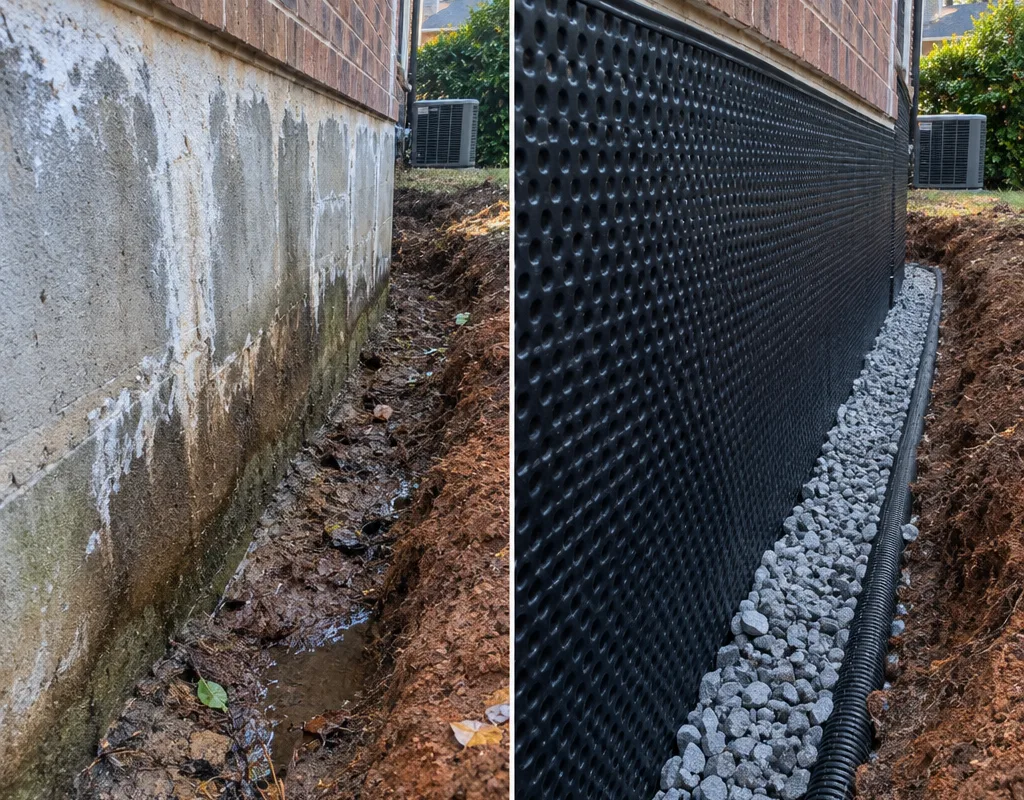
Active water after rain is an obvious reason to arrange an inspection, but earlier signs matter too. White mineral deposits on masonry, peeling paint, recurring damp odors, rust at metal components, darkened framing, or moisture along the wall-floor joint can indicate persistent water movement.
Cracks need context. A narrow, stable crack may permit seepage without indicating major movement. A widening crack, a bowed wall, displaced masonry, sticking doors, or uneven floors calls for structural evaluation before cosmetic sealing. Waterproofing manages water; it does not restore structural capacity to a damaged wall.
Wet conditions can also come from plumbing or heating and cooling equipment. A careful Atlanta waterproofing company should be willing to say when the observed moisture does not appear to be groundwater or rain intrusion. Correct diagnosis can prevent an unnecessary drainage system.
Arrange a detailed inspection when moisture returns after rain, cracks are changing, or competing estimates recommend different systems. A written diagnosis makes the options easier to compare.
Call (470) 934-3230Compare the diagnosed water source, treatment area, materials, drainage route, restoration, exclusions, and warranty rather than the total alone. Atlanta properties can differ sharply in slope and excavation access, so ask each contractor to show where water will be collected and where it will discharge.
The right side depends on the water source, foundation type, access, and project goals. Exterior membranes intercept water before it crosses the wall, while interior perimeter drains manage water after it reaches the foundation. Tight side yards and established landscaping can make exterior excavation more disruptive on intown Atlanta lots.
A contractor can seal certain stable cracks, but moving or structurally significant cracks require a broader evaluation. Injection materials may suit some poured-concrete cracks, while masonry cracks need different repairs. Bowing, displacement, or continued widening should be assessed before waterproofing is selected.
Small crack or drainage corrections may take a short visit, while perimeter drainage, excavation, or crawl-space work can take several working days. Weather, soil conditions, access, buried utilities, demolition, and restoration affect scheduling in Atlanta, so the written scope should state an expected duration.
A standard electric sump pump will not run without power unless the system has a working backup. Battery backup pumps and alarms can provide added protection, but their capacity and maintenance requirements vary. Ask the contractor to explain testing, battery replacement, and expected operation during a severe Atlanta storm.
Permit needs depend on the exact scope and property jurisdiction. Structural alterations, electrical work for a pump, plumbing changes, or major excavation may trigger requirements that a simple repair does not. Ask the contractor to identify permit responsibility in writing and confirm requirements with the City of Atlanta when the property is within city limits.
A warranty should identify the covered area, covered failure, duration, exclusions, transfer terms, and required maintenance. Pump warranties often differ from warranties on installed drainage or membranes, so request the manufacturer's coverage and the contractor's workmanship terms separately.
Waterproofing can reduce moisture entering through soil and foundation walls, but humidity control may require a sealed ground vapor barrier, air sealing, drainage, and mechanical dehumidification. Atlanta's warm, humid conditions make it important to address outdoor air leakage as well as visible standing water.
Tell Foundation Repair Atlanta Georgia where and when water appears. The next step is an inspection focused on the source, the appropriate waterproofing method, and a written scope for the work.