
Water After Rain
Puddles, wet wall-floor joints, or recurring seepage after storms often indicate that surface runoff or subsurface water is reaching the foundation.
Control water at the source with a practical system designed around your foundation, drainage conditions, and signs of moisture intrusion.
Foundation waterproofing in Atlanta must account for heavy rain, roof runoff, sloped lots, and the paths water takes through soil around a home. Damp walls, water stains, efflorescence, peeling coatings, and musty odors can point to moisture intrusion, but they do not all have the same cause. A lasting plan starts by identifying where water enters and why it collects.
Foundation Repair Atlanta Georgia evaluates visible leakage, cracks, wall penetrations, exterior grading, downspout discharge, and drainage conditions before recommending work. Our foundation specialists serving Atlanta match the waterproofing method to the building rather than covering symptoms with a generic coating. The written scope should identify the water source, the proposed control method, discharge arrangements, and any preparation or restoration included in the work.
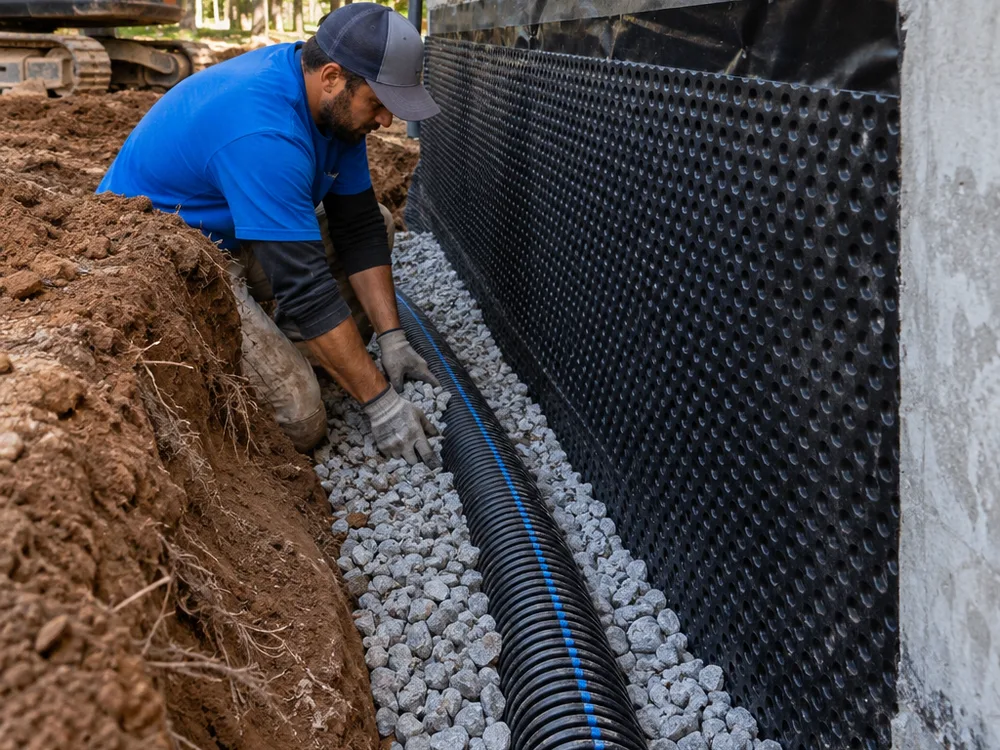
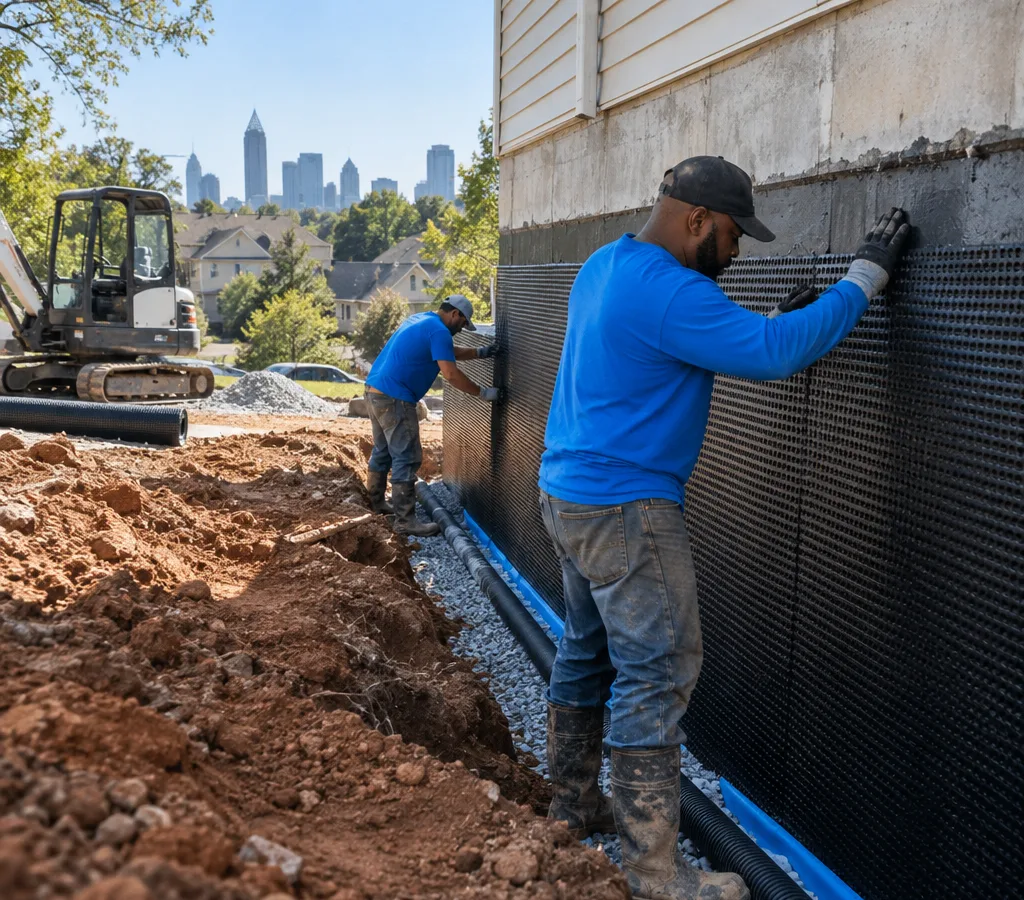
Effective waterproofing uses layers of protection. Exterior work may include excavation beside the wall, crack treatment, a waterproof membrane, drainage board, and a footing drain surrounded by washed stone and filter fabric. The drain collects water at the base of the wall and directs it to an approved outlet or sump system. Exterior work can also address failed coatings and vulnerable penetrations before the soil is replaced.
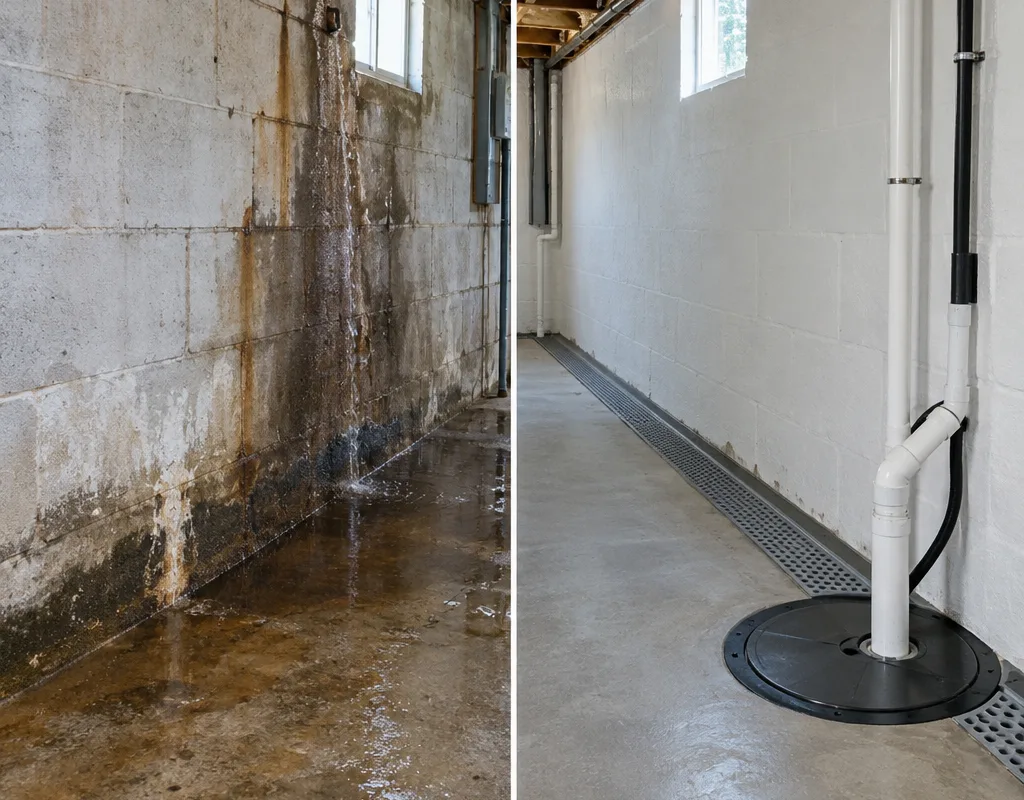
Interior drainage is often considered when exterior excavation is restricted by porches, driveways, close property lines, or landscaping. A perimeter channel intercepts water at the wall and footing joint, then carries it to a sump basin. The pump must discharge where water will not flow back toward the foundation. Interior systems manage incoming water, while exterior membranes are intended to stop soil moisture from reaching the wall. The right choice depends on access, construction type, and the source of leakage.
Puddles, wet wall-floor joints, or recurring seepage after storms often indicate that surface runoff or subsurface water is reaching the foundation.
White mineral deposits, dark water marks, and flaking paint show that moisture has moved through or across masonry. A cosmetic coating alone rarely addresses the source.
Persistent damp odors can indicate elevated moisture around foundation walls or floors, even when standing water is not visible.
Pipe openings, form-tie holes, and foundation cracks can become direct entry points. Repair details must be compatible with the wall material and expected movement.
Low areas near the foundation, short downspout outlets, and hard surfaces pitched toward the building can keep water concentrated beside the wall.
Frequent cycling, an uncovered basin, poor discharge placement, or a lack of backup protection can leave an otherwise sound drainage system vulnerable.
Atlanta receives substantial rainfall throughout the year, including intense storms that can overwhelm poor surface drainage. Red clay soils common across the Piedmont absorb water slowly when compacted and can hold moisture against foundation walls. During dry periods, clay can also shrink. These conditions make water management around the building as important as the membrane or drain installed at the wall.
Housing and terrain vary across the metro area. Virginia-Highland has many older homes where tight lots and established landscaping can limit excavation access. In Buckhead, larger properties and sloped lots may require careful control of uphill runoff and long discharge routes. Grant Park includes older masonry foundations that call for repair materials suited to existing construction. Decatur has a mix of older homes, additions, crawl spaces, and basements, so the drainage plan must reflect how each part was built. In Sandy Springs, rolling terrain can direct water toward the downhill side of a foundation if grading and roof drainage are not coordinated.
A local plan should also consider where collected water can legally and safely discharge. Water should not be sent onto a neighboring property, across a walkway, or back beside the foundation. Work involving significant excavation or changes to stormwater routing may require review under applicable City of Atlanta or local jurisdiction requirements.
We review leak patterns, wall and floor conditions, cracks, penetrations, grading, gutters, downspouts, exterior access, and any existing sump equipment. Moisture readings may help compare suspect areas.
The findings are used to distinguish surface runoff, wall seepage, joint leakage, groundwater pressure, condensation, and plumbing-related moisture. Waterproofing is recommended only for sources it can address.
The proposal identifies the treatment area, preparation, membrane or drainage components, sump and discharge details when applicable, access needs, and restoration responsibilities.
Work areas are protected before excavation or interior cutting begins. Surfaces are cleaned and repaired, then the specified membrane, drain, aggregate, fabric, basin, or pump components are installed.
Drainage paths and pumps are checked where practical. We review operating needs, maintenance points, discharge location, and any grading or downspout changes that remain part of the homeowner's water-control plan.
Exterior waterproofing is often the most direct choice when water is passing through a below-grade wall and the outside can be excavated safely. The work exposes the foundation so cracks, joints, and penetrations can be treated before a continuous membrane and drainage layer are installed. Access, excavation depth, buried utilities, decks, steps, and mature plantings all affect feasibility.
Interior perimeter drainage is less disruptive to the yard and can manage water entering at the wall-floor joint or through masonry. It normally requires cutting a narrow strip of floor, installing a drainage channel and stone, and restoring the concrete. Water then flows to a sump basin. A battery backup or secondary pump can provide protection during a power outage, but every system still needs periodic testing and a clear discharge line.
Waterproofing is not a substitute for structural work when a wall is displaced, bowing, or affected by significant movement. Likewise, humid air and cold surfaces may produce condensation that drainage work will not correct. A sound recommendation separates these conditions before the scope is set.
Foundation waterproofing in Atlanta typically costs about $3,000 to $15,000, while limited crack sealing or drainage corrections may cost less and extensive exterior excavation can exceed that range. Interior perimeter systems are often priced by linear foot; exterior work reflects excavation depth, wall access, membrane area, and restoration.
Final cost changes with foundation type, leak source, system length, sump equipment, buried utilities, porches, landscaping, discharge routing, and required repairs. A site inspection is needed to confirm the exact scope and price.
Exterior waterproofing is generally preferred when the wall itself needs protection and excavation is practical; interior drainage is often suitable when access is restricted or water enters at the wall-floor joint. Atlanta's sloped lots, established landscaping, driveways, and closely spaced homes can affect that choice. An inspection should identify the entry path before either method is selected.
Many focused projects take several working days, while extensive exterior excavation or work on multiple walls can take longer. Depth, weather, utility locating, concrete cutting, site access, and restoration all affect the schedule. Heavy rain can delay excavation because wet soil is harder to handle safely and may prevent proper surface preparation.
Waterproof paint alone usually will not stop active leakage caused by water pressure, open cracks, failed joints, or poor drainage. It may improve a dry interior surface when used as specified, but it is not a replacement for a membrane, repaired penetration, footing drain, or interior drainage channel. White mineral deposits should be removed and the moisture source corrected before refinishing.
Gutter, downspout, and grading corrections can solve some surface-water problems when runoff is the main source. Downspouts should release water away from the foundation at a location that drains safely, and soil should direct water away rather than trap it. If water is entering through below-grade cracks or the wall-floor joint, additional waterproofing may still be required.
Backup power is strongly worth considering when the waterproofing system depends on a sump pump. Atlanta storms can bring heavy rain at the same time as a power interruption, which is when the pump is most needed. The basin, check valve, discharge line, primary pump, and backup unit should be tested according to their manufacturers' instructions.
Foundation waterproofing controls water intrusion, but it does not by itself remove established mold or correct structural movement. Visible microbial growth may require separate assessment and cleanup, while bowing, displacement, or significant cracking requires a structural evaluation. The waterproofing scope should be coordinated with those needs rather than presented as a cure for every condition.
Recurring moisture rarely improves on its own. Get the source identified and receive a written waterproofing scope built around your foundation, access, and drainage conditions.
Call (470) 934-3230Tell Foundation Repair Atlanta Georgia where and when the moisture appears. Our team will inspect the conditions, explain the practical options, and outline a clear path toward a drier foundation.