
Crack Repair
Cracks may be routed and sealed, filled with a flexible sealant, or repaired with a rigid material depending on movement, depth, moisture, and slab use. The repair must bond to clean, sound concrete.
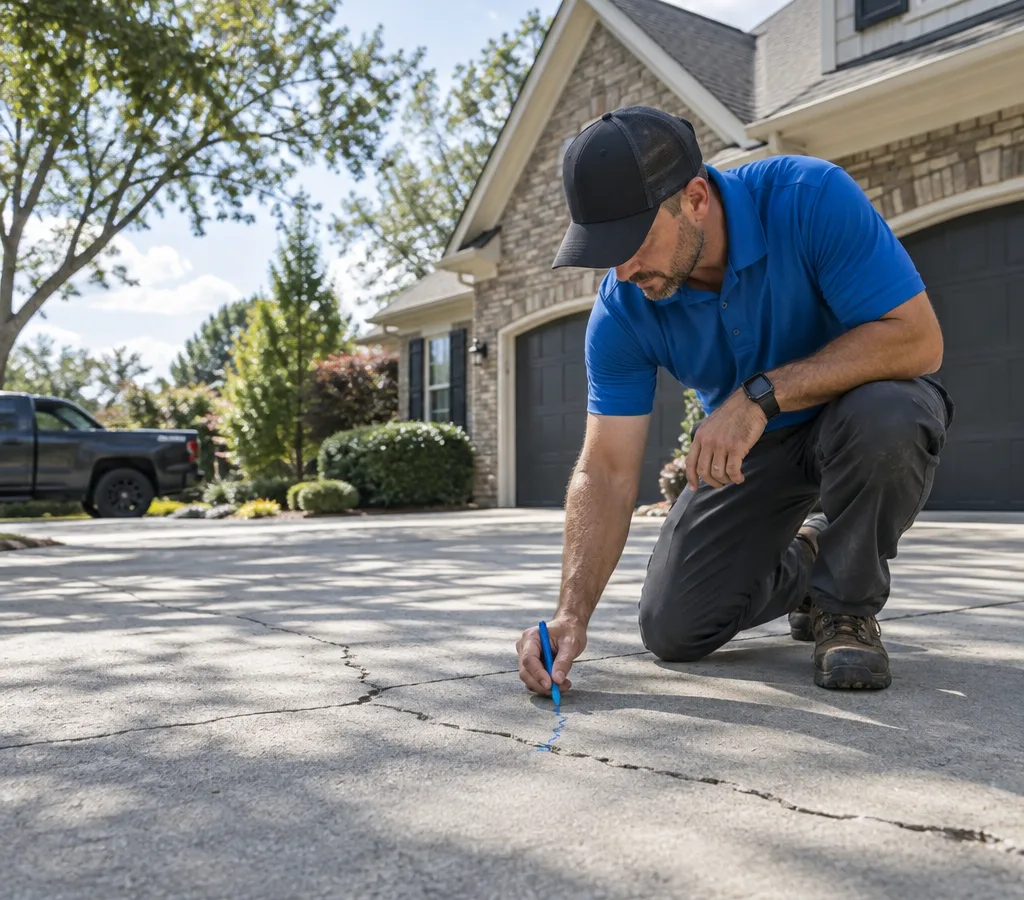
Restore damaged concrete with a repair plan based on the cause, the condition of the slab, and how the surface is used.
Concrete repair in Atlanta should address more than the visible crack. A good repair starts by identifying why the concrete moved or deteriorated, whether the cause is settlement, poor drainage, tree-root pressure, erosion, impact, or repeated water intrusion. The right approach depends on slab thickness, reinforcement, soil support, surface condition, and whether the area carries vehicles or foot traffic.
Foundation Repair Atlanta Georgia repairs driveways, patios, walkways, steps, garage floors, and other residential concrete surfaces. Our foundation specialists serving Atlanta, GA inspect the damaged area, explain which defects are repairable, and provide a written scope before work begins. The goal is a sound repair with appropriate preparation, materials, and curing, rather than a cosmetic patch placed over an unresolved problem.
Atlanta's frequent heavy rain and periods of hot weather can expose drainage and subgrade problems. Water that collects beside a slab may wash out supporting soil or enter existing joints and cracks. Heat also affects working time and curing conditions, so repair materials must be mixed, placed, and protected according to their specifications.
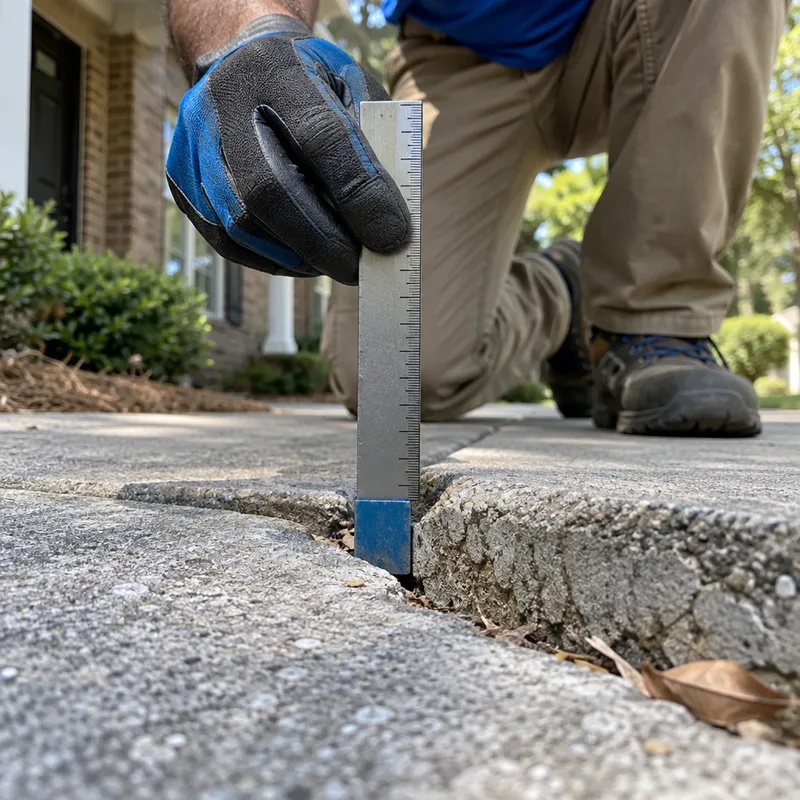
A hairline drying or shrinkage crack does not always indicate serious movement. Wider cracks, vertical displacement, spreading damage, and recurring separation deserve closer inspection. Uneven walkway panels can create a trip hazard, while a sunken driveway section may direct runoff toward a garage or wall.
Look for cracks that continue through the slab, edges that have broken away, pitting or scaling across the surface, hollow areas, exposed aggregate, and gaps between concrete and adjacent structures. Rust staining can indicate corroding embedded metal. A patch that breaks loose soon after installation may point to weak surrounding concrete, inadequate preparation, movement, or the wrong repair material.
Do not rely on crack width alone. Direction, depth, displacement, moisture, and change over time provide better clues. A professional assessment distinguishes surface deterioration from structural movement and determines whether patching, crack treatment, lifting, partial replacement, or full replacement is appropriate.
Cracks may be routed and sealed, filled with a flexible sealant, or repaired with a rigid material depending on movement, depth, moisture, and slab use. The repair must bond to clean, sound concrete.
Spalls, pop-outs, and broken edges are cut back to solid material before a compatible cementitious repair mortar is placed. Feathering a patch over weak concrete usually leads to early failure.
Selected settled slabs may be raised by injecting material beneath them to fill voids and restore support. Suitability depends on slab condition, access, drainage, and the amount and direction of movement.
A bonded overlay can renew concrete with widespread cosmetic wear when the underlying slab remains stable. Active movement, deep deterioration, and unsound concrete must be corrected first.
Failed joint filler and damaged slab edges can admit water and debris. Repair may include removing loose material, rebuilding edges, and installing a joint treatment suited to expected movement.
Replacement is often the sound choice when concrete is badly fractured, has severe elevation changes, or lacks dependable support. Saw-cut boundaries help create a controlled transition to retained concrete.
We review crack patterns, elevation changes, drainage, adjoining structures, previous patches, and the way the slab is loaded. When movement is suspected, measurements help document the current condition.
The proposed scope identifies what will be removed, retained, sealed, patched, lifted, or replaced. It also accounts for access, finish expectations, runoff, and whether the repaired area carries vehicles.
Loose and contaminated material is removed mechanically. Depending on the system, preparation can include saw cutting, grinding, cleaning, joint removal, and conditioning the substrate before placement.
Repair mortar, sealant, overlay, or replacement concrete is installed within the manufacturer's placement limits. Finish and texture are selected to suit the adjoining surface as closely as practical.
Cement-based materials need controlled moisture loss and protection from traffic. We explain when the area can handle foot traffic, vehicles, water exposure, or coatings based on the installed product.
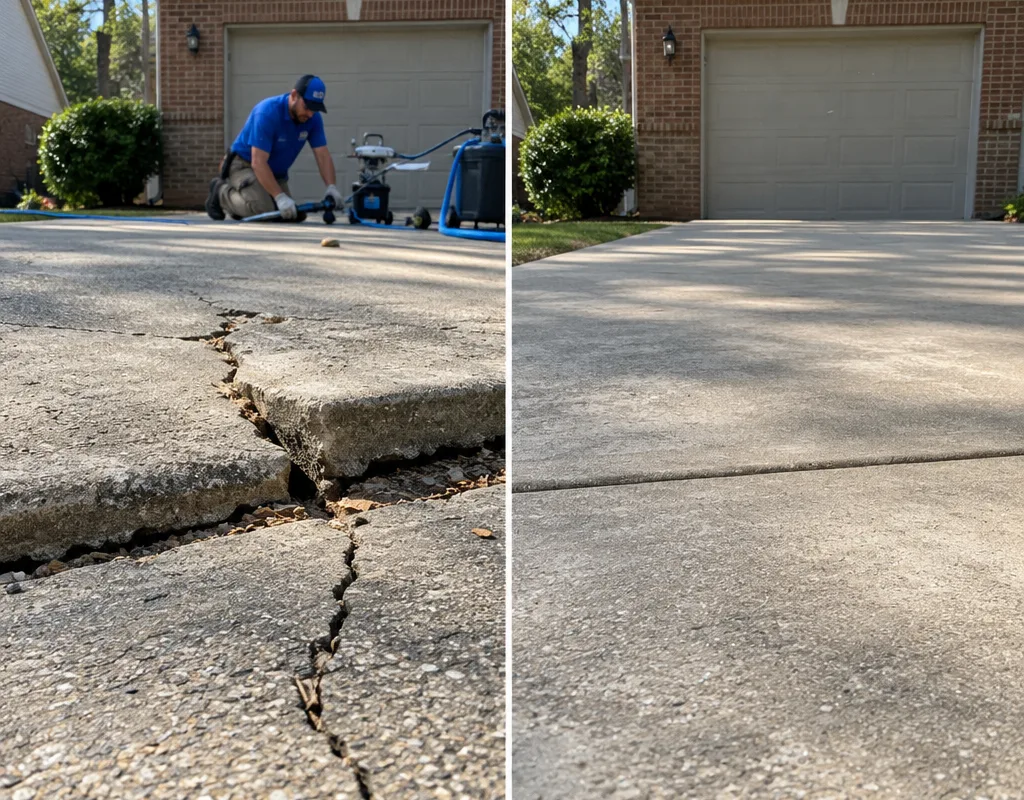
Repair is usually reasonable when damage is localized and the remaining concrete is sound. Examples include isolated spalls, stable cracks, failed joint filler, a broken edge, or a settled slab that is otherwise intact. Keeping serviceable concrete can reduce demolition and disturbance.
Replacement becomes more practical when the slab has extensive map cracking, deep deterioration, multiple displaced fragments, or inadequate support across a broad area. A thin cosmetic coating will not hold fractured sections together or correct a failing base. Replacement also allows the base, slope, thickness, joints, and reinforcement to be addressed before new concrete is placed.
Color matching deserves a direct discussion. New repair materials rarely match aged concrete exactly, and curing changes their initial appearance. Texture can often be blended, but weathering, aggregate, finishing methods, and prior sealers affect the final look. The written scope should state whether the priority is structural performance, trip-hazard reduction, water control, appearance, or a combination of these goals.
Concrete repair in Atlanta typically costs about $500 to $2,500 for localized residential work, while extensive lifting, resurfacing, or partial replacement may range from $2,000 to $8,000 or more. Small crack and edge repairs are generally at the lower end; large driveways and badly deteriorated slabs cost more.
Final price depends on repair area, depth, access, demolition, disposal, material system, reinforcement, finish, and the condition of the base. Drainage corrections or widespread movement can expand the scope. The exact cost is confirmed after an on-site inspection.
Address displaced, crumbling, or water-damaged concrete before the affected area becomes harder to repair. An on-site evaluation will clarify the cause, suitable methods, and realistic finish expectations.
Call (470) 934-3230Yes, localized cracks can often be repaired when the slab remains stable and the surrounding concrete is sound. The method depends on whether the crack is dormant or still moving, whether its edges are displaced, and whether water enters through it. Atlanta rain can expose open cracks to repeated moisture, so sealing and drainage may both need attention.
Many localized repairs can be completed within a day, but curing and return-to-service times vary by material. A fast-setting repair mortar may permit light use sooner than conventional concrete, while a replacement driveway panel needs more time before vehicle traffic. Weather, repair depth, and product specifications set the schedule.
Some intact sunken slabs can be lifted, provided the concrete is strong enough and there is suitable access for the injection process. Slabs with extensive cracking or crumbling may break during lifting and are often better candidates for replacement. The inspection also considers erosion and runoff so the original cause is not ignored.
An exact color match is rarely possible because existing concrete has aged and weathered. Aggregate source, cement color, finish, sealers, and sun exposure all affect appearance. Texture can often be coordinated, and the repair usually becomes less conspicuous as it cures and weathers, but a visible transition should be expected.
Traffic can resume only after the installed material reaches the required cure or strength. Some repair products allow foot traffic relatively quickly, while replacement concrete requires a longer wait before vehicle loading. Atlanta heat may speed surface drying without providing proper internal curing, so the project-specific instructions should control timing.
No, a crack in a driveway, patio, or walkway does not by itself prove a building foundation problem. Concrete can crack because of shrinkage, settlement, erosion, roots, thermal movement, or loading. Cracks that align with wall movement, widening separations, sticking doors, or interior distress warrant a broader structural assessment.
Drainage should be addressed when runoff, ponding, or soil washout contributes to the damage. Repairing the surface while water continues to erode the base can lead to renewed settlement. The assessment should review slab slope, nearby downspout discharge, low areas, and gaps where water enters beside the concrete.
Tell us where the concrete is cracked, uneven, or deteriorating. Foundation Repair Atlanta Georgia will assess the condition and outline a practical scope based on the slab, its support, and the way you use the area.