
Musty Odors Indoors
Air can move upward from a crawl space through gaps around wiring, plumbing, ducts, and framing. Persistent earthy odors may point to damp conditions beneath the floor.
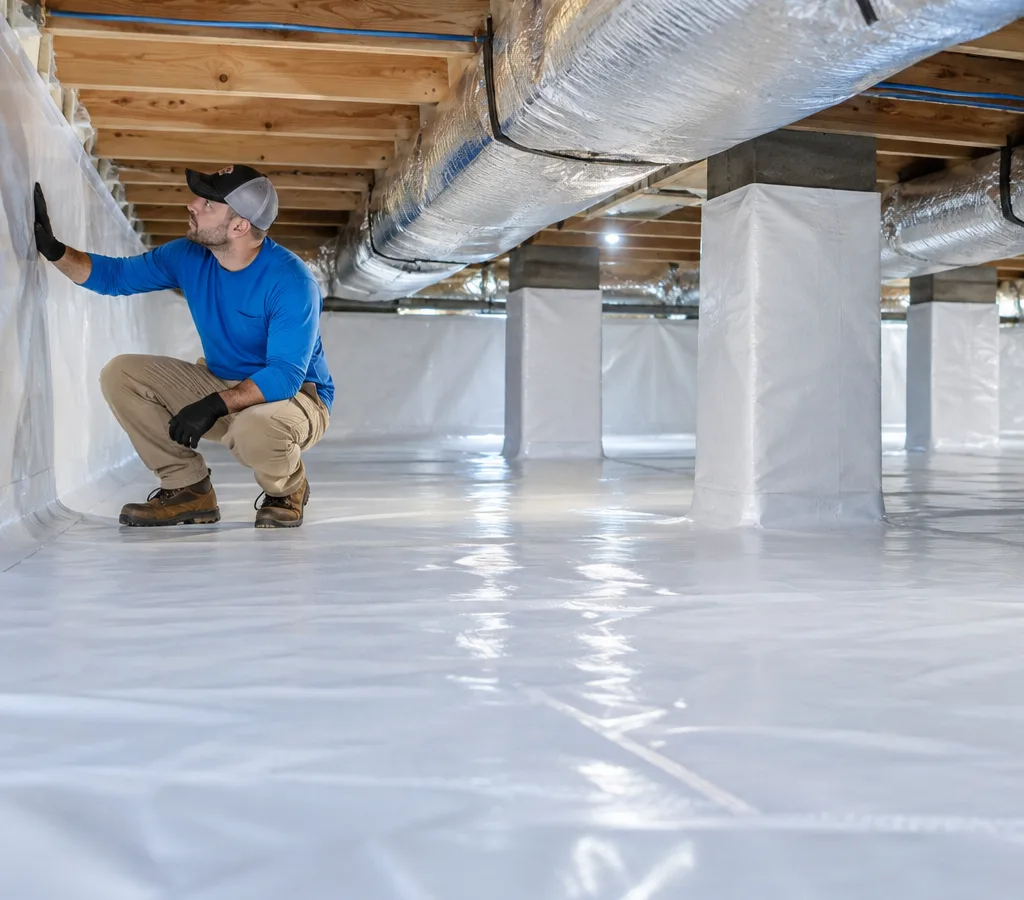
Control ground moisture, reduce musty conditions, and protect the area beneath your home with a system designed around your crawl space.
Crawl space encapsulation in Atlanta addresses moisture at its main entry points: exposed soil, foundation walls, open vents, plumbing penetrations, and an exterior access door that may not seal tightly. A complete system typically combines a reinforced vapor barrier with sealed seams, covered piers, closed vents, and humidity control suited to the conditions under the home.
Foundation Repair Atlanta Georgia begins by inspecting the crawl space rather than prescribing the same package for every property. During the inspection, Atlanta's local foundation service looks for standing water, condensation, damp insulation, visible fungal growth, pest damage, wood deterioration, drainage trouble, and air leaks before recommending work. The plan should distinguish between water entering from outside and moisture vapor rising from the soil. Encapsulation manages vapor and humid air, but active leaks or bulk water need to be corrected as part of the scope.
Atlanta's warm, humid weather can keep an open crawl space damp for extended periods. Heavy rain can also expose grading, downspout, or drainage problems. Addressing those conditions before sealing the crawlspace helps the finished system perform as intended.
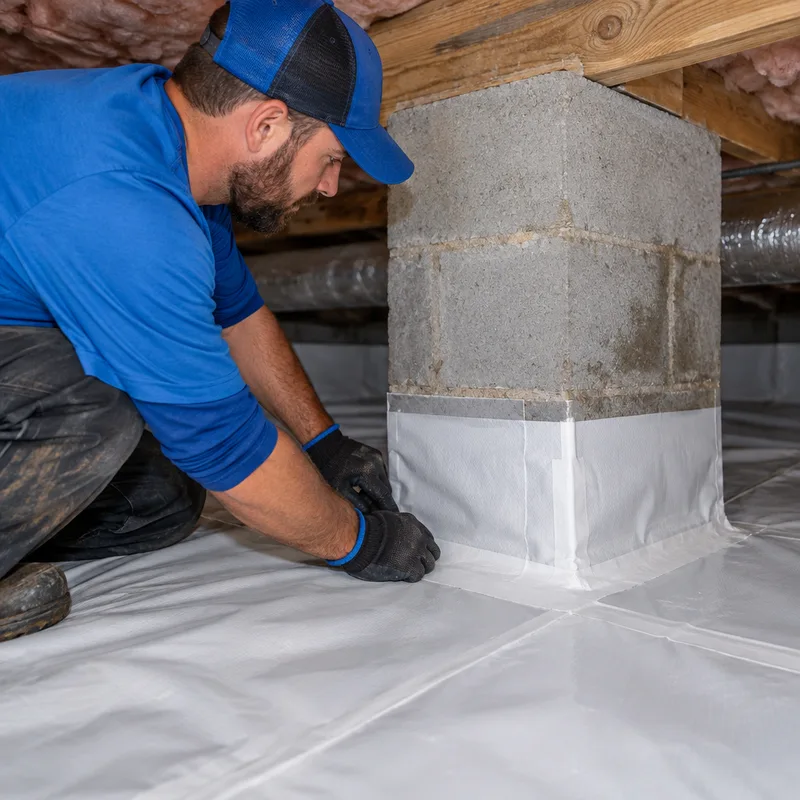
The exact scope depends on access, existing insulation, drainage, and the condition of the foundation walls and framing. Preparation may include removing debris and damaged material, clearing sharp objects from the soil, and treating visible microbial growth when appropriate. The ground liner is then cut around piers and penetrations, with seams overlapped and sealed using compatible tape or adhesive.
A durable system extends beyond laying plastic on the soil. The liner is secured at the perimeter, foundation vents are sealed, and the access opening is fitted to limit humid outside air. Wall coverage and termination details depend on the foundation type and inspection requirements. Where groundwater or runoff reaches the crawl space, drainage and a sump system may be needed before encapsulation. A crawl-space-rated dehumidifier can then maintain controlled conditions, with condensate routed to an approved discharge point.
Wood framing should remain accessible for inspection where required. Combustion appliances also need proper air and venting, so their presence must be identified before vents are closed.
Air can move upward from a crawl space through gaps around wiring, plumbing, ducts, and framing. Persistent earthy odors may point to damp conditions beneath the floor.
Sweating ducts, damp joists, rusted metal, or water droplets on surfaces indicate that humid air is reaching cooler materials.
Fiberglass batts can absorb moisture, sag, and collect dirt. Damaged insulation should be assessed before the crawl space is sealed.
Puddles, water marks, or muddy soil call for a drainage review. Encapsulation should not hide an active water-entry problem.
Dark staining, damaged subflooring, or softened framing warrants close inspection. The source of moisture must be corrected before affected materials are enclosed.
Loose vent covers and gaps at the access door can admit humid air and pests. Sealing these openings is a standard part of a well-planned system.
We examine the soil, walls, vents, piers, framing, insulation, ducts, plumbing, and access point. Moisture readings and visible evidence help separate humidity problems from plumbing leaks or exterior water intrusion.
The written scope identifies preparation, liner coverage, seam treatment, vent sealing, access improvements, drainage needs, and whether mechanical dehumidification is appropriate.
Debris and failed materials included in the scope are removed. Sharp projections are addressed, and known water sources are corrected before the new barrier is installed.
The liner is fitted across the soil and around piers, then sealed at seams and penetrations. Perimeter details, vents, and the access opening are completed according to the agreed design.
If the design includes a crawl-space-rated dehumidifier, it is positioned for service access and connected to a dependable condensate route. The operating setting is established for controlled conditions.
We check accessible seams, perimeter attachments, penetrations, drainage components, and equipment operation. The homeowner receives practical guidance for routine observation and maintenance.
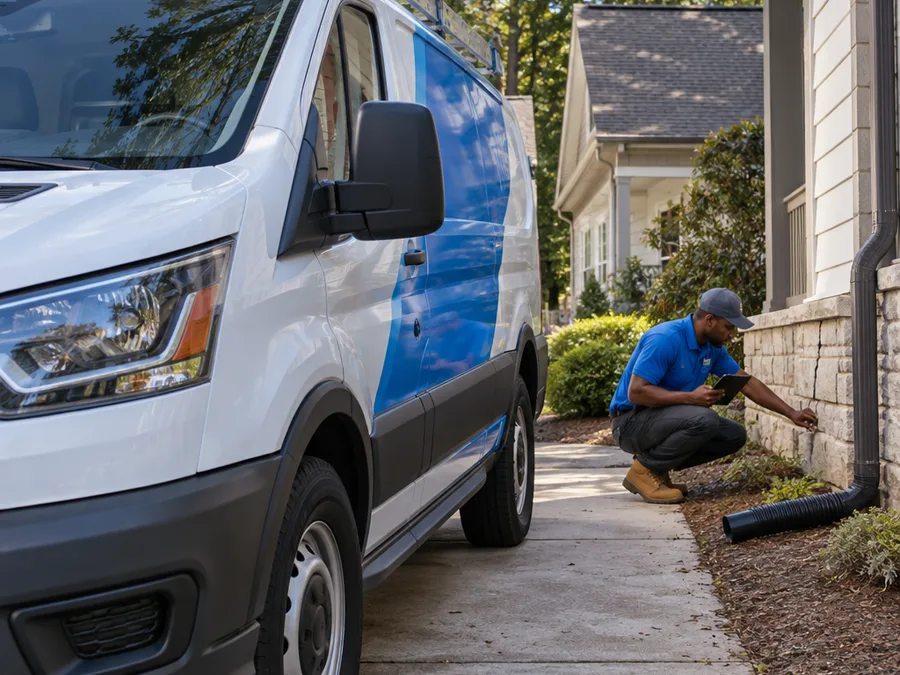
Atlanta has long, humid summers and periods of heavy rainfall, both of which matter beneath a raised floor. Open foundation vents can admit moisture-laden air, while cooler ducts, pipes, and framing provide surfaces where condensation may form. A sealed crawl space changes that environment by separating the home from exposed soil and reducing uncontrolled outdoor-air exchange.
Housing conditions vary across the metro area. Older homes in Grant Park and Virginia-Highland may have tight access, masonry piers, additions, or previous repairs that require careful fitting. Decatur includes many older homes where low clearances and aging vent openings can complicate installation. Sandy Springs and Marietta include sloped properties where runoff, grading, and downspout discharge deserve attention before a liner is installed. These traits affect preparation and detailing; they do not justify a one-size-fits-all package.
Encapsulation is also distinct from structural repair. If the inspection finds settled supports, damaged joists, or foundation movement, those conditions need their own diagnosis. The moisture-control plan should coordinate with any required corrective work rather than cover it.
Atlanta crawl space encapsulation typically costs about $5,000 to $15,000, while large, low-access, or water-affected crawl spaces may cost more. A basic vapor-barrier scope is less than a full system with wall coverage, vent sealing, drainage, a sump pump, and a dehumidifier.
Final price depends on crawl-space area and height, liner thickness, debris removal, damaged insulation, pier count, access, standing water, electrical needs, and microbial treatment. General ranges are nonbinding because site conditions vary. The exact cost is confirmed after an on-site inspection and written scope.
Get the source of the moisture identified and a written encapsulation scope before damp conditions cause further damage beneath your home.
Call (470) 934-3230Many residential installations take several working days, but drainage work, debris removal, low clearance, or damaged materials can extend the schedule. Older homes in neighborhoods such as Grant Park may require more fitting around masonry piers, additions, and utility penetrations. The inspection should establish both the work sequence and a realistic timeline.
A dehumidifier is recommended when sealing alone will not maintain suitable humidity or when the crawl space contains moisture-producing conditions. Equipment sizing depends on the enclosed volume, dampness, drainage, ductwork, and air leakage. The unit should be rated for crawl-space use and installed where its filter and condensate system remain accessible.
Standing water should be controlled before or as part of encapsulation. The source may be poor grading, downspout discharge, groundwater, a plumbing leak, or water entering through the foundation. Depending on the cause, the scope may require exterior corrections, interior drainage, or a sump system. A liner alone is not a dependable fix for active water entry.
Encapsulation can reduce odors caused by damp soil and humid crawl-space air, but the source must also be addressed. Wet insulation, microbial growth, plumbing leaks, and deteriorated wood may need separate treatment or removal. Because air can pass through floor penetrations, sealing and humidity control often matter as much as the liner itself.
The suitable liner is chosen by durability needs, access, soil conditions, and how the crawl space will be used. Reinforced liners resist punctures better than thin utility plastic, especially where technicians need to reach plumbing, ducts, or equipment. Thickness is only one factor; sealed seams, pier detailing, perimeter attachment, and surface preparation determine whether the barrier is continuous.
Damaged insulation and visible growth should be evaluated before the crawl space is enclosed. Wet or fallen insulation may need removal, and affected materials may require cleaning or replacement based on their condition. Sealing over unresolved moisture or contaminated debris can trap the problem inside the finished crawl space.
An encapsulated crawl space still needs periodic observation and equipment service. Check for plumbing leaks, displaced liner, drainage trouble, pest activity, and unusual humidity after major storms. If a dehumidifier is installed, its filter, drain line, and operating status need routine attention according to the manufacturer's instructions.
Tell Foundation Repair Atlanta Georgia what you have noticed beneath your home. We will assess the moisture sources, access, and existing materials, then outline the work needed for a properly sealed crawl space.