
Primary Pump
A submersible pump sits inside the basin and activates when rising water lifts the float. Selection depends on flow demand, total head pressure, solids-handling needs, and outlet size rather than horsepower alone.
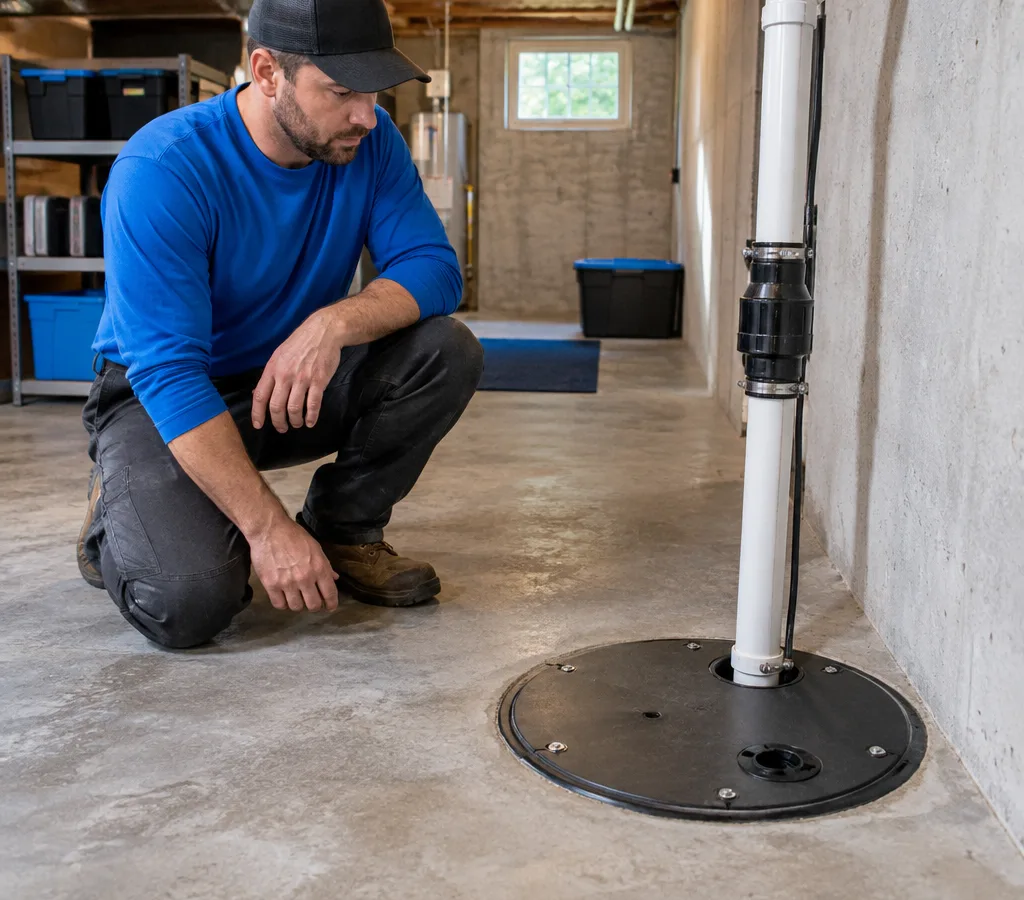
Move groundwater away before it reaches your basement or crawl space with a properly sized pump, basin, discharge line, and backup plan.
Sump pump installation in Atlanta starts with identifying where water collects, how it reaches the low point, and where it can be discharged safely. A pump placed in an undersized or poorly located pit may run often without keeping the area dry. The installation has to work as a complete system.
Foundation Repair Atlanta Georgia installs sump systems around the conditions found at the property. Our work as a professional foundation company in Atlanta, GA includes evaluating the drainage path, selecting the pump capacity, setting the basin, routing the discharge pipe, and testing operation before completion. The goal is dependable water removal without creating a new problem near the building.
Atlanta can receive intense rain that overwhelms poor grading, clogged gutters, and undersized drainage. Properties on sloping lots may also receive runoff from higher ground. In low areas such as basement corners or crawl-space trenches, that water can build hydrostatic pressure against foundation walls and floor slabs. A sump system intercepts collected water and pumps it to an approved discharge point away from the structure.
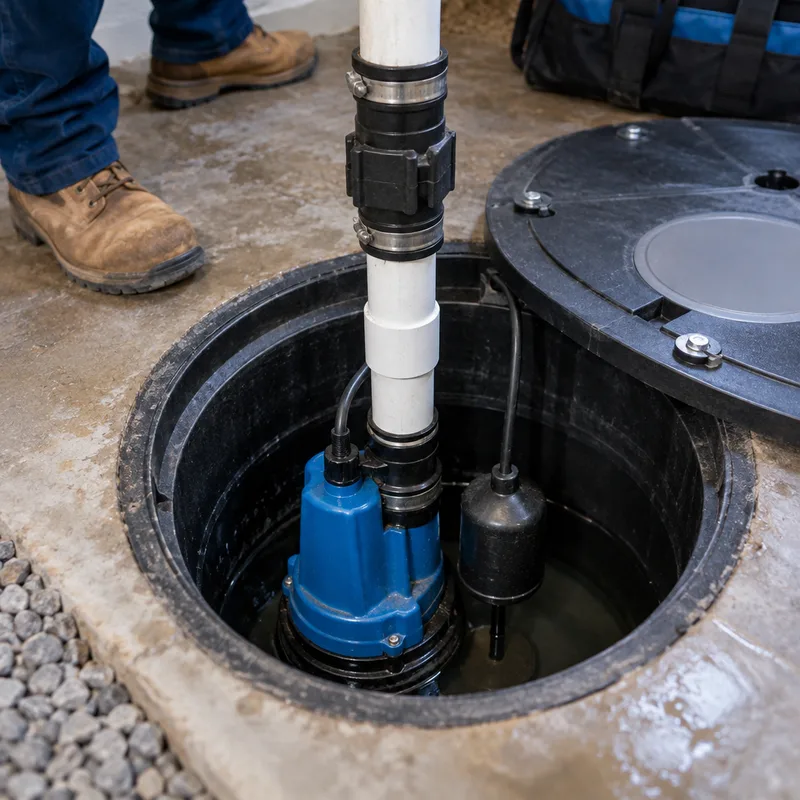
The pump is only one component. A typical installation uses a durable basin set at the collection point, a submersible pump matched to the required lift and pipe run, a float switch, a check valve, and rigid discharge piping. A fitted basin cover helps keep debris out and reduces moisture entering the indoor air.
Water must have a path into the basin. Depending on the property, that may be an existing drain, a perimeter drainage channel, or another dedicated collection route. The discharge line must then carry water far enough away that it does not flow back toward the foundation. Pipe diameter, vertical lift, horizontal distance, elbows, and the discharge endpoint all affect performance.
The electrical supply matters too. The pump should use a suitable grounded receptacle, and extension cords are not a permanent wiring method. If electrical work is needed, it should comply with applicable requirements. We also check that the float can move freely, the check valve is oriented correctly, and the line does not leak when the pump cycles.
A submersible pump sits inside the basin and activates when rising water lifts the float. Selection depends on flow demand, total head pressure, solids-handling needs, and outlet size rather than horsepower alone.
A battery-powered backup can operate during a power outage or assist if the primary pump cannot keep pace. Backup capacity and expected runtime depend on the pump, battery condition, and pumping frequency.
An alarm provides an early warning when water rises beyond the normal operating level. It does not replace a backup pump, but it can alert the property owner before water escapes the basin.
A secure cover limits debris, helps protect the pump and float, and reduces open water exposure. Where radon mitigation is involved, the cover and penetrations may require airtight sealing.
Rigid piping, a functioning check valve, supported joints, and a suitable outlet help prevent backflow and repeated recycling of discharged water.
The basin should remain accessible for inspection, cleaning, pump replacement, and testing. Permanent finishes should not block the cover or operating components.
We review visible water entry, staining, drainage routes, the lowest collection point, grading, and possible discharge locations. Existing pumps and pits are checked for capacity, damage, and improper routing.
The proposed scope identifies the basin location, pump type, pipe route, check valve, cover, outlet, and any recommended backup or alarm. Access and finished surfaces are considered before work starts.
The work area is opened as required, and the basin is placed at the correct depth and elevation. The surrounding collection connection is established so water can reach the pit rather than pooling nearby.
The pump is set securely, the float is given unobstructed travel, and the discharge assembly is connected. Piping is supported and routed toward the planned outlet away from the foundation.
Water is added to confirm automatic activation, pumping, shutoff, and check-valve operation. We inspect for leaks and explain routine testing, cleaning, alarm use, and backup maintenance.

Atlanta properties vary widely in age, elevation, foundation style, and access. In older intown neighborhoods such as Grant Park and Virginia-Highland, basement utility spaces can be tight, and finished areas may limit practical pipe routes. Installation planning must account for access without placing the basin where walls, equipment, or stored items interfere with service.
In hilly areas around North Druid Hills, runoff direction and changes in grade can influence where water collects against the building. In Buckhead, larger lots and long pipe runs may increase total head and affect pump selection. Decatur also has many established properties where additions, patios, and mature landscaping can complicate the choice of a discharge endpoint.
These traits do not determine the same answer for every property. The actual plan comes from the building, lot, and observed water route. Discharge should not create erosion, send water back toward the structure, or direct runoff onto an adjoining property. Local requirements and site constraints should be checked before the final outlet is chosen.
Sump pump installation in Atlanta typically costs about $1,200 to $3,500 for a new basic system, while more involved work with drainage connections, difficult access, longer discharge piping, or battery backup may cost $3,500 to $7,500 or more.
Final price depends on concrete cutting, basin size, pump capacity, electrical readiness, pipe length, vertical lift, interior finishes, and the discharge location. Replacing a pump in a sound existing basin usually costs less than building a complete collection system. The exact cost is confirmed after an on-site inspection and written scope.
Standing water near the basin, a pump that runs continuously, repeated rapid cycling, grinding sounds, or a float that fails to activate all warrant attention. Water marks around the pit can indicate that the system has overflowed. A pump that operates but moves little water may have a blocked line, failed check valve, damaged impeller, or more head pressure than it can handle.
Test the system periodically by adding enough clean water to raise the float. The pump should start, lower the water, and shut off normally. Keep the basin free of sediment and objects that could obstruct the float. Outside, inspect the outlet for blockage, soil washout, or water returning toward the house. Battery backup units also need battery testing and replacement according to the equipment manufacturer's instructions.
A sump pump manages water that reaches its collection system. It does not correct every source of moisture, condensation, plumbing leakage, or surface runoff. Gutters, downspouts, exterior grading, and drainage routes may still need attention. A useful inspection separates those issues so the recommended work addresses the actual water path.
Have the water path, pump capacity, backup options, and discharge route evaluated before the next heavy rain exposes a weak point.
Call (470) 934-3230A straightforward installation in an accessible, unfinished area can often be completed in a day, while systems that require concrete cutting, drainage connections, electrical work, or a long discharge route may take longer. Tight basement spaces in older Atlanta homes can also add preparation and restoration time. The expected schedule should be included with the written scope.
No, a sump pump is appropriate when water can be collected and discharged safely, but it is not the right fix for every moisture problem. Plumbing leaks, condensation, poor gutter drainage, and surface runoff require different corrections. An inspection should identify the source and determine whether a sump basin can intercept the water effectively.
A battery backup is worth considering when the property has a history of rapid water entry, outages during storms, finished space at risk, or no practical gravity-drain option. Atlanta thunderstorms can combine heavy rain with power interruptions, which is exactly when a primary electric pump may be needed. Battery age, charging status, and pumping capacity must be checked regularly.
The outlet should send water to a lawful location where it can drain away without returning to the foundation, eroding soil, or affecting neighboring property. The correct endpoint depends on lot slope, available drainage, pipe length, and local requirements. A sanitary sewer connection should never be assumed to be acceptable.
Pump selection is based on expected inflow and total dynamic head, not horsepower by itself. Total head includes vertical lift plus friction from the pipe length, diameter, fittings, and check valve. The selected pump's performance curve should show adequate flow at the actual operating head.
A correctly designed sump system can remove collected groundwater, but it cannot guarantee dryness when water bypasses the collection route or enters through another source. Finished Atlanta basements need careful planning because flooring, walls, and stored belongings can conceal early signs of leakage. The inspection should evaluate collection coverage, pump redundancy, alarms, and discharge reliability.
Replacement is appropriate when a pump fails testing, runs loudly, cycles erratically, has visible corrosion, or cannot keep up with normal inflow. Age alone does not prove failure, so operating condition and capacity should guide the decision. The basin, float clearance, check valve, power supply, and discharge line should be assessed at the same time.
Describe where water appears and when it happens. Foundation Repair Atlanta Georgia can assess the collection point, equipment needs, discharge route, and backup options, then provide a clear scope for the work.